33211
God
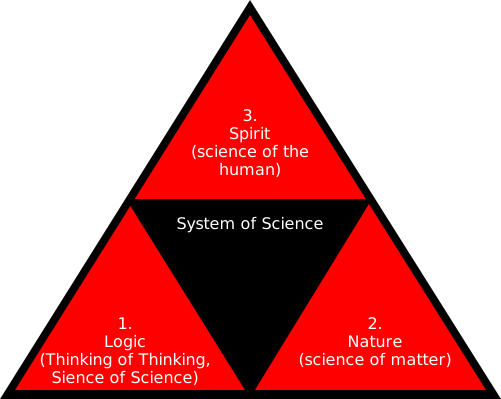
- 0 Hegel's 'System of Science'
- 1 Logic (Thinking of Thinking, Science of Science)
- 2 Nature (science of matter)
- 3 Spirit/Mind (Science of humanities)
- 31 Subjective Spirit/Mind (Science of the inner Human)
- 32 Objective Spirit/Mind (Science of the interpersonal)
- 33 Absolute (divine) Spirit, that knows itself and its goal
- 331 Art (seeing the truth, Aesthetics)
- 332 Religion (representing the truth, theology)
- 333 Philosophy (comprehension of the truth)
- 3321 Concept of religion
- 3322 Finite Religions (specific religions)
- 3323 Christianity (absolute religions)
- 33211 God
- 33212 Knowledge of God
- 33213 The ritual (the cult)
- 332111 God as absolute substance
- 332112 God is only for thought
- 332113 Pantheism