1313
Syllogism
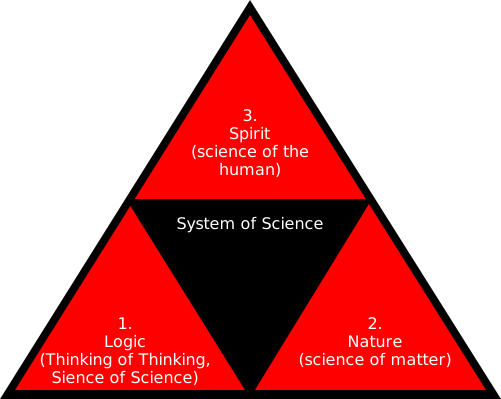
- 0 Hegel's 'System of Science'
- 1 Logic (Thinking of Thinking, Science of Science)
- 2 Nature (science of matter)
- 3 Spirit/Mind (Science of humanities)
- 11 Being (immediateness, 'Ontology')
- 12 Essence (mediation, reflection, metaphysics)
- 13 Concept (Notion / Logos / Comprehension, 'Begriff')
- 131 The subjective Concept (formal Concept)
- 132 The Object (real Concept)
- 133 The Idea (adequate Concept)
- 1311 Moments of the Concept
- 1312 Judgement (division of Subject and Object)
- 1313 Syllogism
- 13131 Syllogism of Determinate Being (S-P-U)
- 13132 Syllogism of Reflection (U-S-P)
- 13133 Syllogism of Necessity (P-U-S)