Totality
Hegel (pervasive, systematic principle)
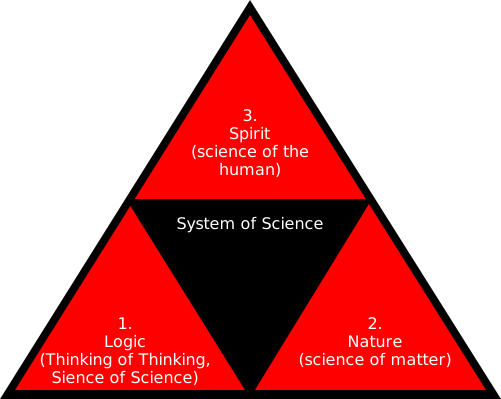
Totality is the organic whole in which each moment is mediated through all the others. It is not a sum (external completeness), but a living unity. Totality contains all determinations, but not as a dead list — rather as a self-developing system. Example: the organism as totality (each organ functions only within the whole). Logically: the complete ground as the totality of its conditions. System as the totality of the categories. "The true is the whole" — but the whole is processual, not static.
Origin
Lat. totalitas (wholeness). Aristotle: to holon (the whole) is more than the sum of the parts. Spinoza: substance as absolute totality. Kant: totality of conditions in the antinomy. Hegel: totality as living, self-developing whole.
In Hegel
Enz. §146 (Ground); (pervasive)
Im buch
Ch. 5.8, 7.8, 23.1