Absolute Idea
Hegel (core concept)
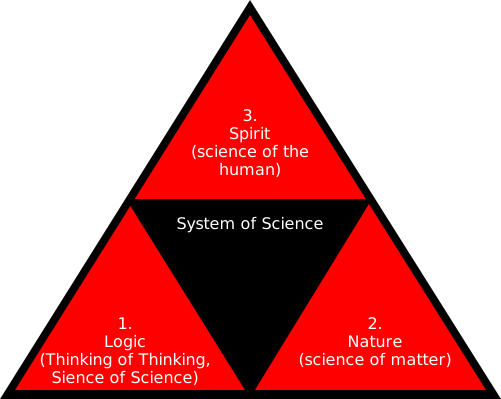
The concluding concept of the *Science of Logic*. The absolute idea is not a supreme being or world-spirit, but the fully transparent method of comprehending thought itself. It is thought that sees through itself as process: the unity of form (logical method) and content (all the categories traversed), of subjectivity and objectivity. The absolute idea is at once the result of the entire Logic and the insight into its own method --- a circle that runs back into itself without becoming arbitrary.
Origin
The term "idea" stems from the Platonic tradition (*idea* as archetype, *eidos*). In Kant, the idea became a regulative principle of reason. Hegel radicalizes this: the idea is not merely thought or striven for, but actual --- it shows itself in experience, insofar as this is rationally comprehended. *Whether* it is the "structure of reality itself" (an ontological reading) or "merely" a form of thought remains an open question (see Ch. 17.7, 23a). The "absolute" marks that no further external conditions are presupposed.
In Hegel
Enc. §236-244; SL Vol. 2, The Idea