Skip to content
hegel.net

    Nothing found

    Search data could not be loaded

    • 🇩🇪 deutsch
    • 🇫🇷 français
    • 🇮🇹 italiano
    • 🇪🇸 español
    • 🇧🇷 português
    • 🇳🇱 hollands
    • 🇷🇺 русский
    • 🇨🇳 中国
    • 🇰🇷 한국의
    • 🇯🇵 日本の
    • 🇮🇳 हिन्दी
    • 🇸🇦 العربية
      • Overview
      • Logic
      • Nature
      • Subjective Spirit
      • Objective Spirit
      • Art
      • Religion
      • Philosophy
      • Quotations
      • Phenomenology
      • Texts online
      • All writings
      • Editions
    • E-Texts
      • Articles
      • Topics
      • Commentary on the Logic
      • Commentary on the Philosophy of Nature
      • Commentary on Subjective Spirit
      • Commentary on the Philosophy of Right
      • Glossary
      • Hegel-Studien
      • The Owl of Minerva
      • Biography
      • Timeline
      • Contemporaries
      • Gallery
      • History of Hegel's reception I
      • History of Hegel's reception II
      • People
      • Hegelian PDFs
    • FAQ
      • Download posters
      • Buy posters
      • Audiobooks (German)
      • Quiz
      • What's new
      • Use and symbols
      • Ways of ordering
      • Kinds of cross-reference
      • About these pages
      • Links
      • Imprint
      • Terms of use
      • Privacy policy
      • E-mail
    • 🇩🇪 deutsch
    • 🇫🇷 français
    • 🇮🇹 italiano
    • 🇪🇸 español
    • 🇧🇷 português
    • 🇳🇱 hollands
    • 🇷🇺 русский
    • 🇨🇳 中国
    • 🇰🇷 한국의
    • 🇯🇵 日本の
    • 🇮🇳 हिन्दी
    • 🇸🇦 العربية

    22333

    Chemical substances (separation)

    ?
    2.2.3.3.3. Chemical substances (separation) © 2003-2026 hegel.net · Kai Froeb 2.2.3.3.3. Chemical substances (separation) 2.2.3.3.3.1. Chemical elements (the undecomposed) 2.2.3.3.3.2. Oxides, acids and bases (the opposition) 2.2.3.3.3.3. Salts and organic compounds (neutrality) One level back to Chemical process One level further to Chemical elements (the undecomposed) One level further to Oxides, acids and bases (the opposition) One level further to Salts and organic compounds (neutrality)
    2.2.3.3.3. Chemical substances (separation) © 2003-2026 hegel.net · Kai Froeb 2.2.3.3.3. Chemical substances (separation) One level back to Chemical process One level further to Chemical elements (the undecomposed) One level further to Oxides, acids and bases (the opposition) One level further to Salts and organic compounds (neutrality) 2.2.3.3.3.1. Chemical elements (the undecomposed) 2.2.3.3.3.1.1. [Non-metals] 2.2.3.3.3.1.2. [Semi-metals] 2.2.3.3.3.1.3. Metals One level back to Chemical elements (the undecomposed) One level further to [Non-metals] One level further to [Semi-metals] (boron, silicon, germanium, arsenic, antimony, tellurium) One level further to Metals 2.2.3.3.3.2. Oxides, acids and bases (the opposition) 2.2.3.3.3.2.1. [Oxides] 2.2.3.3.3.2.2. [Acids] 2.2.3.3.3.2.3. [Bases and lyes] One level back to Oxides, acids and bases (the opposition) One level further to [Oxides] (the immediate combination with oxygen) One level further to [Acids] (the dissolving, being-for-another) One level further to [Bases and lyes] (the receptive) 2.2.3.3.3.3. Salts and organic compounds (neutrality) 2.2.3.3.3.3.1. [Simple salts] 2.2.3.3.3.3.2. [Oxide salts] 2.2.3.3.3.3.3. [Carbon compounds] One level back to Salts and organic compounds (neutrality) One level further to [Simple salts] (metal with non-metal or semi-metal) One level further to [Oxide salts] One level further to [Carbon compounds] (transition to the organic)
    2.2.3.3.3. Chemical substances (separation) © 2003-2026 hegel.net · Kai Froeb 2.2.3.3.3. Chemical substances (separation) One level back to Chemical process One level further to Chemical elements (the undecomposed) One level further to Oxides, acids and bases (the opposition) One level further to Salts and organic compounds (neutrality) 2.2.3.3.3.1. Chemical elements (the undecomposed) One level back to Chemical elements (the undecomposed) One level further to [Non-metals] One level further to [Semi-metals] (boron, silicon, germanium, arsenic, antimony, tellurium) One level further to Metals 2.2.3.3.3.1.1. [Non-metals] [Basic chemical elements] 2.2.3.3.3.1.1.1. [Reactive elements] 2.2.3.3.3.1.1.2. [Noble gases] 2.2.3.3.3.1.1.3. One level back to [Non-metals] One level further to [Basic chemical elements] One level further to [Reactive elements] One level further to [Noble gases] (helium, neon, argon etc.) 2.2.3.3.3.1.2. [Semi-metals] One level back to [Semi-metals] (boron, silicon, germanium, arsenic, antimony, tellurium) 2.2.3.3.3.1.3. Metals [Light metals and alkalis] 2.2.3.3.3.1.3.1. [Heavy main-group metals] 2.2.3.3.3.1.3.2. [Transition and rare-earth metals] 2.2.3.3.3.1.3.3. One level back to Metals One level further to [Light metals and alkalis] (the self-consuming) One level further to [Heavy main-group metals] (tin, lead, bismuth, thallium) One level further to [Transition and rare-earth metals] (the self-contained) 2.2.3.3.3.2. Oxides, acids and bases (the opposition) One level back to Oxides, acids and bases (the opposition) One level further to [Oxides] (the immediate combination with oxygen) One level further to [Acids] (the dissolving, being-for-another) One level further to [Bases and lyes] (the receptive) 2.2.3.3.3.2.1. [Oxides] [Non-metal oxides] 2.2.3.3.3.2.1.1. [Semi-metal oxides] 2.2.3.3.3.2.1.2. [Metal oxides and hydroxides] 2.2.3.3.3.2.1.3. One level back to [Oxides] (the immediate combination with oxygen) One level further to [Non-metal oxides] (H2O, CO2, etc.) One level further to [Semi-metal oxides] (quartz/rock crystal, agate, opal) One level further to [Metal oxides and hydroxides] (corundum, magnetite, haematite, bauxite, goethite) 2.2.3.3.3.2.2. [Acids] [Oxyacids] 2.2.3.3.3.2.2.1. [Hydracids] 2.2.3.3.3.2.2.2. [Organic acids] 2.2.3.3.3.2.2.3. One level back to [Acids] (the dissolving, being-for-another) One level further to [Oxyacids] (sulphuric, nitric, phosphoric, carbonic acid) One level further to [Hydracids] (hydrochloric, hydrofluoric, hydrosulphuric acid) One level further to [Organic acids] (formic, acetic, citric, oxalic acid) 2.2.3.3.3.2.3. [Bases and lyes] [Alkali lyes] 2.2.3.3.3.2.3.1. [Alkaline earth bases] 2.2.3.3.3.2.3.2. [Volatile bases] 2.2.3.3.3.2.3.3. One level back to [Bases and lyes] (the receptive) One level further to [Alkali lyes] (caustic soda, caustic potash) One level further to [Alkaline earth bases] (slaked lime, baryta water) One level further to [Volatile bases] (ammonia, amines) 2.2.3.3.3.3. Salts and organic compounds (neutrality) One level back to Salts and organic compounds (neutrality) One level further to [Simple salts] (metal with non-metal or semi-metal) One level further to [Oxide salts] One level further to [Carbon compounds] (transition to the organic) 2.2.3.3.3.3.1. [Simple salts] [Sulphides] 2.2.3.3.3.3.1.1. [Halides] 2.2.3.3.3.3.1.2. [Arsenides and tellurides] 2.2.3.3.3.3.1.3. One level back to [Simple salts] (metal with non-metal or semi-metal) One level further to [Sulphides] (metal sulphur: pyrite, cinnabar, galena, etc.) One level further to [Halides] (metal halides: rock salt, sal ammoniac, fluorspar, etc.) One level further to [Arsenides and tellurides] (nickeline, calaverite, skutterudite) 2.2.3.3.3.3.2. [Oxide salts] [Non-metal oxide-metal] 2.2.3.3.3.3.2.1. [Semi-metal oxide-metal] 2.2.3.3.3.3.2.2. [Metal-oxide salts] 2.2.3.3.3.3.2.3. One level back to [Oxide salts] One level further to [Non-metal oxide-metal] One level further to [Semi-metal oxide-metal] One level further to [Metal-oxide salts] (chromates, molybdates, tungstates: potassium chromate, wulfenite, scheelite) 2.2.3.3.3.3.3. [Carbon compounds] [Hydrocarbons] 2.2.3.3.3.3.3.1. [Oxygen-bearing compounds] 2.2.3.3.3.3.3.2. [Nitrogen-bearing compounds] 2.2.3.3.3.3.3.3. One level back to [Carbon compounds] (transition to the organic) One level further to [Hydrocarbons] (methane, petroleum, bitumen, asphalt) One level further to [Oxygen-bearing compounds] (alcohols, sugars, fats, resins, amber) One level further to [Nitrogen-bearing compounds] (amino acids, proteins, nucleic acids — transition to 2313)
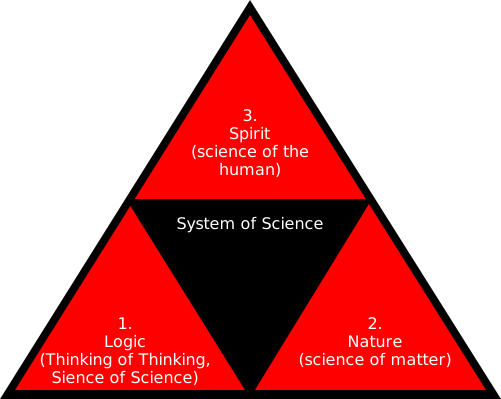
    • 0 Hegel's 'System of Science'
    • 1 Logic (Thinking of Thinking, Science of Science)
    • 2 Nature (science of matter)
    • 3 Spirit/Mind (Science of humanities)
    • 21 Mechanics
    • 22 Physics (including Chemistry)
    • 23 Organism / Life (Subjectivity)
    • 221 General physicalities
    • 222 Peculiarities (special individuality)
    • 223 Physical body (single individuality)
    • 2231 Body shape
    • 2232 Properties against others
    • 2233 Chemical process
    • 22331 Formal chemical process
    • 22332 Real chemical process
    • 22333 Chemical substances (separation)
    • 223331 Chemical elements (the undecomposed)
    • 223332 Oxides, acids and bases (the opposition)
    • 223333 Salts and organic compounds (neutrality)

    Texts online

    • HTM The Philosophy of Nature (Book 2 of the Encyclopedia) 1817

    Hegel texts on this topic

    • Enzyklopädie II, § 334🇩🇪 DE

    Commentary on this

    • What Remains of Mechanics
    • Why This Part Is the Weakest
    • Three Misunderstandings to Clear Away in Advance
    • The "Wide Field" — Why Physics Contains So Much

    Chemical Substances

    To the glossary index · ↑ Top of page

    The separation: from one product, distinct substances emerge once again. Hegel sees in this the reversal of combination — and thus the circle that the chemical process traces out.

    In Hegel: 22333

    Cross-references: Ch. 21

    Commentary on the Philosophy of Nature: I. What It Undertakes

    To the glossary index · ↑ Top of page

    ← Real chemical process ↑ Chemical process

    Copyright for the triangle diagram, its labelling and the selection of links above this notice:
    © 2020–2026 by hegel.net, Kai Froeb. This content is licensed under CC BY-NC-SA 4.0.

    Copyright for the explanatory text below the triangle:
    © 2020–2026 by hegel.net, Kai Froeb. The explanatory text is licensed under the ZMC licence.

    Share

    Share

    ✉ Email 𝕏 X in LinkedIn f Facebook

    Imprint Terms of use Privacy policy